Tuesday, June 29, 2010

Going Native: Plants of the Prairie


There is so much talk about growing native plants these days: what is native, what isn't, what are weeds, what can be called "wildflowers", what natives belong in a home garden and what should best be left in the wild, on and on. In my opinion (which I don't think you asked for, but I'm gonna give it to you anyway, I'm shameless) there are many native wildflowers which can be grown in a garden. But! and here's the caveat: some just aren't suitable or even manageable in a small space. Some of them need room, lots of it! Many need the kind of environment most backyard gardeners can't give them, and may just turn up their toes and die in our nice rich garden soil with all the water they could ever possibly want.....or else, on such a rich diet, go absolutely kick-up-their-heels rampant and try to fill every available corner with their offspring or their greedy roots. A firm hand is needed with these characters. They are native plants because they have adapted to survive under specialized, and sometimes harsh conditions that exist in the local environment. A few  actually need fire to germinate!

Prairie wildflowers are among those that survive on neglect, producing zillions of seeds, only a small percentage of which will actually find the right conditions to germinate. In spite of being found in full, intense sun on open prairies, a lot of them are actually shade plants, growing in the shade of tall grasses that tower over them as they complete their life cycles.

 Those pictured below are all plants of the midwest. Many of them can be found all over the United States, wherever prairie-like accomodations for these hardy plants can be found: in pastures, on roadsides, empty lots, in sidewalk cracks where you would thnk they couldn't get a root-hold.
. They ask for little more than a bit of soil, sun,
and that it rains once in a while.


The last time we went to Roaring River State Park, here in SW Missouri, we went hiking on the Firetower Trail (between trout fishing). It's a beautiful trail, through richly diverse woods, that eventually winds through a restored dolomite glade area with wonderful native wildflowers blooming in glorious abundance. It is a harsh, rocky area in full, blazing sun with competition from grasses, trees and predators to eat them, but somehow, they survive and are beautiful!

A few, like the puffy pink sensitive briar below, have their own defenses--the stems are thorny and hurtful to touch! Prickly pear cactus, also often found on certain types of glades, is very well armed. Some taste terrible, but all are host plants for some form of insect life or provide habitat for Mother Nature's pets, which feed on the insects that feed on the plants.....in the interconnectedness that is life.

Mimosa nuttallii (sensitive briar, cat's claw)

A wild member of the allium family

Prairie Larkspur

Prairie mallow

Echinacea (cone flower)

Asclepias (Butterfly weed)

Coreopsis

Deptford pink

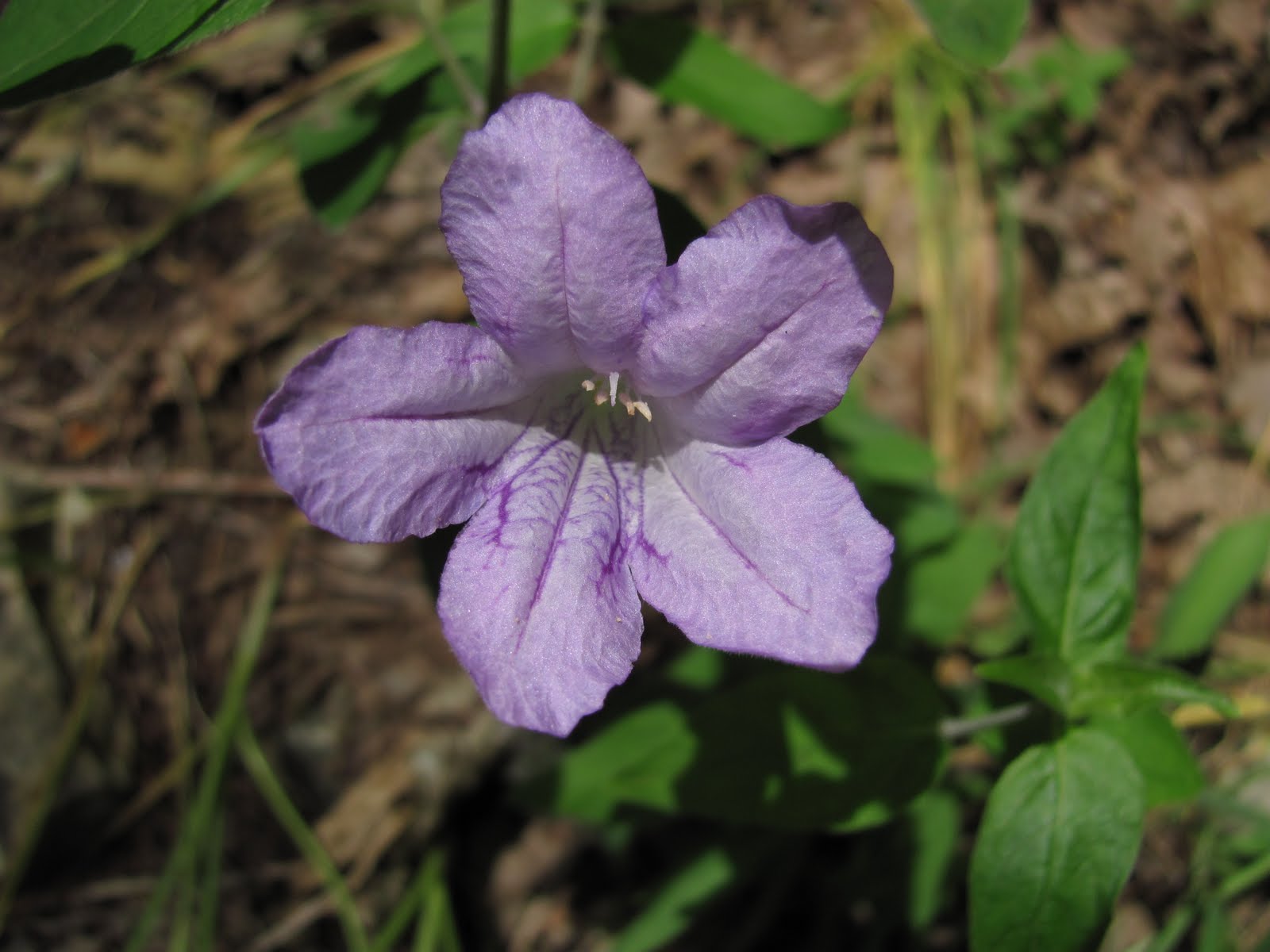
Ruellia

Yarrow

Prairie rose

Yellow clover

daisy fleabane

The wonderful golden seed puff of goatsbeard

Not your average garden! But this is where they all live, and do it so beautifully!

Many of these grow in my garden, and I find that they do very well. (Note: Most of them have come on their own, with no help from me, except to recognize them when I saw them.) Almost too well, in fact. With good soil and plentiful water, the majority of them tend to be a bit invasive, or at the least, extremely aggressive. They have to be tended to with a ruthless hand, pulling them out with no sentiment or there would be no paths or beds, just a sea of wildflowers to wade through! Which, come to think of it, might not be such a bad thing!

"A wildflower is just a weed with a pretty face. If ragweed was beautiful, we wouldn't care if it made us sneeze!"---Anon.
To learn more about the Roaring River Conservation Opportunity Area, please visit their website:
http://mdc4.mdc.mo.gov/Documents/17987.pdf And if you get an opportunity, visit in person!

Sunday, June 20, 2010

For All You Hosta Freaks Out There

You know who you are, all you hosta lovers, freaks and geeks! Obsessive/compulsives, like me, who think there are no bad hostas. And we want all of them we can get! Lucky for us, there are thousands of varieties to choose from! (Oh, and don't be fooled by my knowing their names. I'm only telling you about the ones that haven't lost their labels, or never had any. I'm not that organized!)

Lower hosta bed, looking up. The pink in the middle is astilbe "Heart and Soul". El Nino is the pretty little blue and white in the foreground. Midwest Magic to the right. Two dogwoods, one pink and one white, will eventually shade this bed. We lost a small elm that shaded it, and poor Pizazz got its leaves burned this spring, but it is coming out of it.
On Stage
Of course, there has to be a Sum and Substance!
The big one in front is Regal Splendor. One of my favorites and a beautiful, reliable hosta that seems to be slug-proof. Left of it is Fire Island, Pineapple Upside-down Cake, Sum of all, and in the background, Blue Angel. This is the upper level. Someday, Sum of All, Blue Angel and T Rex (to the left, on the other side of the elephant ears and out of sight) will fill the center of this bed. These hostas were planted in '08 and '09., except Regal Splendor which is about 5 years old.

An assortment, next to the path going down to the lower level

Silver Threads and Golden Needles

Old bed under redbud tree, these hostas have been here for 6 years.

Pizazz at the top. You can see the sun damage.  Liberty is in front, left. Next to Liberty was labeled as White Feather, but it is not.

Sun Power

Great Arrival, in the center

Looking down into a new area, dwarf and mini hostas go down there.

Always beautiful and always reliable, Albo Marginata

New bed, just planted this spring (except for the A.M.'s.

Other side of mini-hosta bed. This area is new this summer, last week in fact. The larger hostas were transplanted out of spots where they were being crowded. A very young Big Daddy is in the back center.
Stilletto

Halcyon

Sweet Home Chicago. See the astilbe next to it?

This is when they were planted, in 2008. The astilbe has to come out! It doesn't stand a chance between Chicago and Veronica Lake, on the right! That's Paul's Glory, in the back.

Gold Standard in the back, Antioch in the front. Both old varieties but nice!

From left: Fragrant Summer, First Frost, Guacamole, Abiqua Drinking Gourd, underplanted with Kabitan

Albo Marginata Montana

Saving the best for last, Blue Angel. This plant is about 9 years old.
Hope you have enjoyed this sampling of my hosta collection!
Happy Gardening!

"I have always been delighted at the prospect of a new day, a fresh try, one more start, with perhaps a bit of magick waiting somewhere behind the morning." ---Jpseph Priest 1753-1804

Thursday, June 17, 2010

What's Blooming in the Garden! Just a Bunch of Pretty Flowers

A sampling of what is going on in Chaos

Bath's Pink Dianthus

Pink Missouri primrose


Astilbe

Regal lily


Common orange daylily

Dwarf yellow daylily

One of my summer favorites, Queen Anne's lace. The flowers are wonderful, pressed. They look like snowflakes.

Yellow lily

Pot of impatiens and pansies on the back steps

wildflower, starry campion

Anacyclis blooming in a bed of sedums


hardy crinum lily


I think this is Catherine Woodberry


big orange daylily (sorry, lost label!)

Enjoy!

"Steep thyself in a bowl of summertime" --Virgil

Wednesday, June 9, 2010

Go Outside and Play!


When I wasn't outside, playing in the woods or climbing trees and building treehouses, riding my bike or otherwise being a kid, I was upstairs in my room either sewing doll clothes or sitting on my windowseat, reading. When I could get away with it. Mama would find me and I'd hear it. "Go outside and play!" if it was a nice day. I'd usually drag my book and blanket outside and hide somewhere to read, if it was a good book. (I knew if I didn't get out that door, she would put me to work and I'd be scrubbing woodwork or helping can something, or worse yet, ironing.)

Still today it's a tossup whether I would rather read, or be outdoors, or both. So when I found three good books at the flea market yesterday, all of them about the outdoors, I was in book heaven! They are all from the 1970's, which isn't all that long ago, but classics as the word goes. All "coffee table" size books, full of pictures by lots of text. One is "This Good Earth", a collection of articles from Audubon, and fascinating reading with wonderful photos about the natural world.

Another is "Harvest of a Quiet Eye, the Natural World of John Burroughs", one of the most eloquent nature writers of the 20th century, though now largely unknown by this genration. He was a contemporary of poet Walt Whitman,  natural history writer Henry Thoreau, and naturalist explorer John Muir. What distinguished company! He also made a highly publicized tour of Yellowstone with Theodore Roosevelt, which might be familiar from the PBS series on National Parks of this past year; and went camping with Henry Ford and Thomas Edison. His was a quiet fame that lives on in his writings, and hopefully this generation and those to come will rediscover them and come to love them as well. I remember reading his writings as a child, laying with a blanket under my tummy and a forsythia bush for a room, soakiing up his clean, descriptive phrases and getting my grubby fingers all over the pages (much to the dismay of the local librarian, I have no doubt!) of "Wake Robin", in particular, and one about bees and honey and sharp eyes that sticks in my mind still. I'll have to hunt them all down and read them again.

The third, "John Muir's Longest Walk", by John Earl, traces his thousand mile walk to Florida in 1867. For those of you who are familiar with John Muir, you will know that he was the father of conservation, founder of the Sierra Club and explorer of Yosemite, Sequoia, Kings Canyon, Mount Rainier, the Petrified Forest, Grand Canyon, and Glacier Bay. There was much coverage of Muir's travels in the PBS National Park series also. There is a California state park in his honor. John Earl, photographer, traced and photographed Muir's thousand mile walk, in 1973, seeing things through the eyes of John Muir himself. Text is by John Muir himself, taken from a book that was published from his own journal. I have just glanced at this one so far, but it looks fascinating and I can't wait to read it thoroughly. "I only went out for a walk," he says, "and finally concluded to stay out till sundown, for going out, I found, was really going

 "The universe to me  is a grand spectacle that fills me
with awe and wonder and joy,
and with intense curiousity." 
                       ---John Burroughs

Saturday, June 5, 2010

A Walk Out Beyond: The Remaking of a Forest

Twenty-seven years ago in April when I first set eyes on the acre where I live, with it's blooming tulip magnolia and lawn full of violets and buttercups, I knew I had come home.  Didn't much matter what the house was, I wanted that tree!


The stone cottage with seashells embedded in the walls was just a bonus. The woods was a tangle of honeysuckle, euonymous and poison ivy, with a variety of oaks, hackberry and elms, a couple of old apple trees and a small struggling peach, all that remained of a once thriving garden and orchard, along with patches of gooseberries. A jungle of mock oranges was in one corner close to the cottage behind an old frame, one-room house that was falling into disrepair. An ancient smoke tree, a red dogwood and a young hawthorn graced what was a sort of a lawn. It was going to be a lot of work!

But down the street and directly behind my woods, there was a two-acre lot that was kept neatly mowed by absentee owners; with a wet-weather drainage stream in the hollow and huge old oaks towering on the hilly slope above it. It was spring; the grass was studded with a zillion wildflowers; anemones, adder's tongue, violets, buttercups and hundreds more tiny spring flowers. It was heaven!

My neighbor to the south kept his lawn and the acre behind his house, which adjoined the meadow, neatly manicured as well, with more old oaks probiding shade.

And it stayed that way for several years. I loved it, loved to walk through that lovely meadow with the flowers and birds, into the woods beyond that, which had been let grow for many years and had majestic 300 hundred year old oaks, mayapples, mossy creek banks and a huge patch of blackberries, the remnants of a once thriving, pick-your-own berry farm.

But alas, things change and soon disaster befell this little slice of Eden. I was never sure why, though I did ask questions but got no clear answers. It might have been because the owner got tired of keeping it mowed, or sold it, but one day trucks began dumping huge quantities of fill all over the pristine meadow; huge pieces of concrete and rock and clay until in some places it was nearly 3 feet deep, from an excavation which was going on for a new highschool. That was the end of it ever being mowed again. And it was disastrous for the venerable oaks, having their roots buried under tons of debris. It took 4 or 5 years for them to die, but the aged giants began to topple over, one after another, leaving tangled branches and trunks on top of the chunks of concrete and tall grasses that now filled this once serene place. It was painful to watch the honeysuckle and poison ivy take over, smothering  everything. The wet-weather drainage was filled with four feet of that crap, damming up the neighborhood drainage to the north. Since we are not in the city, there were no codes in place to stop the dumping, and it went on while we stood by helplessly. After all, it wasn't our property.

Shortly after that, the mature woods on the other side was brutally decimated when the (different) owner decided to build apartment buildings where they stood, and cut down all those wonderful oaks, selling them off to someone who manufactures pallets. (!!!) It too soon became an impossible tangle of honeysuckle and brush, the woods gone. So was part of the noise buffer the trees provided between us and the freeway
half a mile to the south. The apartment house never materialized as neighborhood opinion quickly quashed that. We circulated petitions and showed up en masse before the city council (that property is in the city limits, just barely) on the day the permit hearing was held. The permit was refused, but it was too late for the woods. Then he decided to build a single dwelling there, and began building up part of that land with fill dirt and debris also, until there is now a mound some 50' high. Most of the blackberries are covered up and it is truly an ugly sight. I will spare you that picture. Finally the city put a stop to the dumping because of neighborhood complaints, and nothing more has happened to it. I am sure the owner will never carry out his plans. He just laid the area to ruins. 

Soon after, my south neighbor died, and his back acre fell into neglect with no one to care for it. It grew up into tall grass and weeds, the house rented out to a string of tenants, none of whom have been into lawn maintainence. It began to blend with the ruined meadow and now seems to be a part of it.

Life goes on. The land has been lying fallow for the 15 years or so since the first dumping went on behind us, in the area we now call Out Beyond. It is still covered with honeysuckle, and the ice storm of '07 did further damage to the remaining trees, littering huge branches everywhere and felling some more of the weaker trees, which still lie.

What's left of the last big oaks to decline and fall. It took 10 years for this one to die.

Most of the concrete chunks are covered now, the stream has cut a new path and drains the area once again, and there is reforesting going on, with young oaks and hickories growing tall. Some old oaks that didn't get buried still survive, though many are slowly declining, providing woodpecker homes in dead branches.

Wildflowers have sprung up once again, and though the meadow is gone, early spring brings them in huge patches among the red cedars that are popping up by the hundreds. Soon there will be a cedar woods here.

 What is most interesting is that there are tree species growing tall that were never there before. Lilacs, both white and purple, bloom in the spring. Everything must have been seed-planted by the birds and animals, or the seed blew in on the wind.

                                           A young sweet gum, tall and beautiful, grows next to the stream.

A sycamore or two, several wild pears, cherries, a cottonwood, lots of elms and hackberries, to be expected, a few young maples, and a young white pine is thrusting its way skyward among a mess of honeysuckle. There was another, but the deer stripped the bark and killed it, which is why we haven't cleared the vines around the survivor; to restrict access to it. It seems to be growing well anyway and is taller than I am.
Blackberry patches have established in the sunny areas where there were oaks, and a huge patch of wild strawberries has come. It is on its way to becoming a beautiful forest once again, although completely different in character from what it once was. One day the sycamore, cottonwoods, pines, oaks and other trees will be mature and shade out some of the rampant undergrowth. Right now it is home to scores of birds; bluebirds, woodpeckers, hawks, creepers, thrushes, robins, jays and more, and teeming with wildlife including the damn raiding deer, groundhogs, foxes, weasels, raccoons, possums, and who knows what all else.
Wonder who lives in here? Groundhog, maybe.

It is beginning to be a wonderful place again. We keep a path mowed through it so we can walk there, and into the woods further Out Beyond. On Earth Day we found a young weeping willow on sale for half price, and planted it directly behind our woods, in the hollow next to the stream. Hopefully it will have a chance to grow.

That is, if it is left alone. The danger is not over to this plot of land. It was sold to someone who was going to build on it, some 10 years ago, and then changed their minds. There is only one small area to build, because the lower area is a natural drain that fills in the spring, and there are no utilities or sewer service there. Not worth a contractor messing with, and the adjacent woods are not for sale, at least while our elderly neighbor still lives. Who knows what her inheriting children will do?  Now it is for sale again, and has been for several years, but the asking price is so high as to be laughable, or else we would have purchased it long ago to keep anyone from building there.

I have been slowly moving some of the wildflowers to our own property, in advance of any bulldozers or brush hogs that might suddenly appear, because one never knows and we don't want to lose them completely.  We walk the paths with a pair of pruners, and cut honeysuckle out of some of the trees to keep them from being smothered (they do deserve a chance, after all) and spray some of the poison ivy with Roundup to keep it from spreading into our woods as I am severely allergic to it. I intend to keep the biggest patch mowed so it doesn't come back, and that is under the sweet gum tree. And hope everyday that no one buys it, or that the owners should suddenly drop the price to within reason so we can snap it up.

Looking into the woods back of Out Beyond

As for the other woods, with all the fill on one side, the trees are beginning to grow back there somewhat also, though the old sassafrass and some of the remaining oaks are now under tons of dirt and concrete, as well as most of the blackberries. We have weed-whacked a path through about 4 acres of it, behind our elderly neighbor's house (she owns part of it as well as another neighbor down the street), so we can hunt the morel mushrooms that thrive there, and enjoy the wildflowers in that woods also. Hawks nest here, and we found a turkey vulture roost on an old dead tree the last time we were walking  One day soon we will go back at dusk for pictures, when they are coming in to settle for the night. Deer live here too, in about a three mile stretch of forest along the interstate.

Which is another story: the state highway department has clear cut and bulldozed an area along the interstate, leaving a huge, scarred, rocky, muddy mess along the outside of the woods, with downed trees like jackstraws left to litter the forest edge, further reducing our tree buffer zone. I assume they did that to deprive the deer of cover from which to jump out in front of cars and trucks on the highway. This area is where I find a lot of the moss to transplant to my woods. I wish I had gotten more before the bulldozers came and plowed it up. But even there, a recent walk found sun loving wildflowers springing up everywhere.

This moss is going home with me on my next woods walk.

Unidentified wildflower (need to look this up)

Nature has a wonderful way of concealing scars.

"Naure is a mutable cloud which is always and never the same."
                      Ralph Waldo Emerson