Showing posts with label native plants. Show all posts

Tuesday, June 29, 2010

Going Native: Plants of the Prairie


There is so much talk about growing native plants these days: what is native, what isn't, what are weeds, what can be called "wildflowers", what natives belong in a home garden and what should best be left in the wild, on and on. In my opinion (which I don't think you asked for, but I'm gonna give it to you anyway, I'm shameless) there are many native wildflowers which can be grown in a garden. But! and here's the caveat: some just aren't suitable or even manageable in a small space. Some of them need room, lots of it! Many need the kind of environment most backyard gardeners can't give them, and may just turn up their toes and die in our nice rich garden soil with all the water they could ever possibly want.....or else, on such a rich diet, go absolutely kick-up-their-heels rampant and try to fill every available corner with their offspring or their greedy roots. A firm hand is needed with these characters. They are native plants because they have adapted to survive under specialized, and sometimes harsh conditions that exist in the local environment. A few  actually need fire to germinate!

Prairie wildflowers are among those that survive on neglect, producing zillions of seeds, only a small percentage of which will actually find the right conditions to germinate. In spite of being found in full, intense sun on open prairies, a lot of them are actually shade plants, growing in the shade of tall grasses that tower over them as they complete their life cycles.

 Those pictured below are all plants of the midwest. Many of them can be found all over the United States, wherever prairie-like accomodations for these hardy plants can be found: in pastures, on roadsides, empty lots, in sidewalk cracks where you would thnk they couldn't get a root-hold.
. They ask for little more than a bit of soil, sun,
and that it rains once in a while.


The last time we went to Roaring River State Park, here in SW Missouri, we went hiking on the Firetower Trail (between trout fishing). It's a beautiful trail, through richly diverse woods, that eventually winds through a restored dolomite glade area with wonderful native wildflowers blooming in glorious abundance. It is a harsh, rocky area in full, blazing sun with competition from grasses, trees and predators to eat them, but somehow, they survive and are beautiful!

A few, like the puffy pink sensitive briar below, have their own defenses--the stems are thorny and hurtful to touch! Prickly pear cactus, also often found on certain types of glades, is very well armed. Some taste terrible, but all are host plants for some form of insect life or provide habitat for Mother Nature's pets, which feed on the insects that feed on the plants.....in the interconnectedness that is life.

Mimosa nuttallii (sensitive briar, cat's claw)

A wild member of the allium family

Prairie Larkspur

Prairie mallow

Echinacea (cone flower)

Asclepias (Butterfly weed)

Coreopsis

Deptford pink
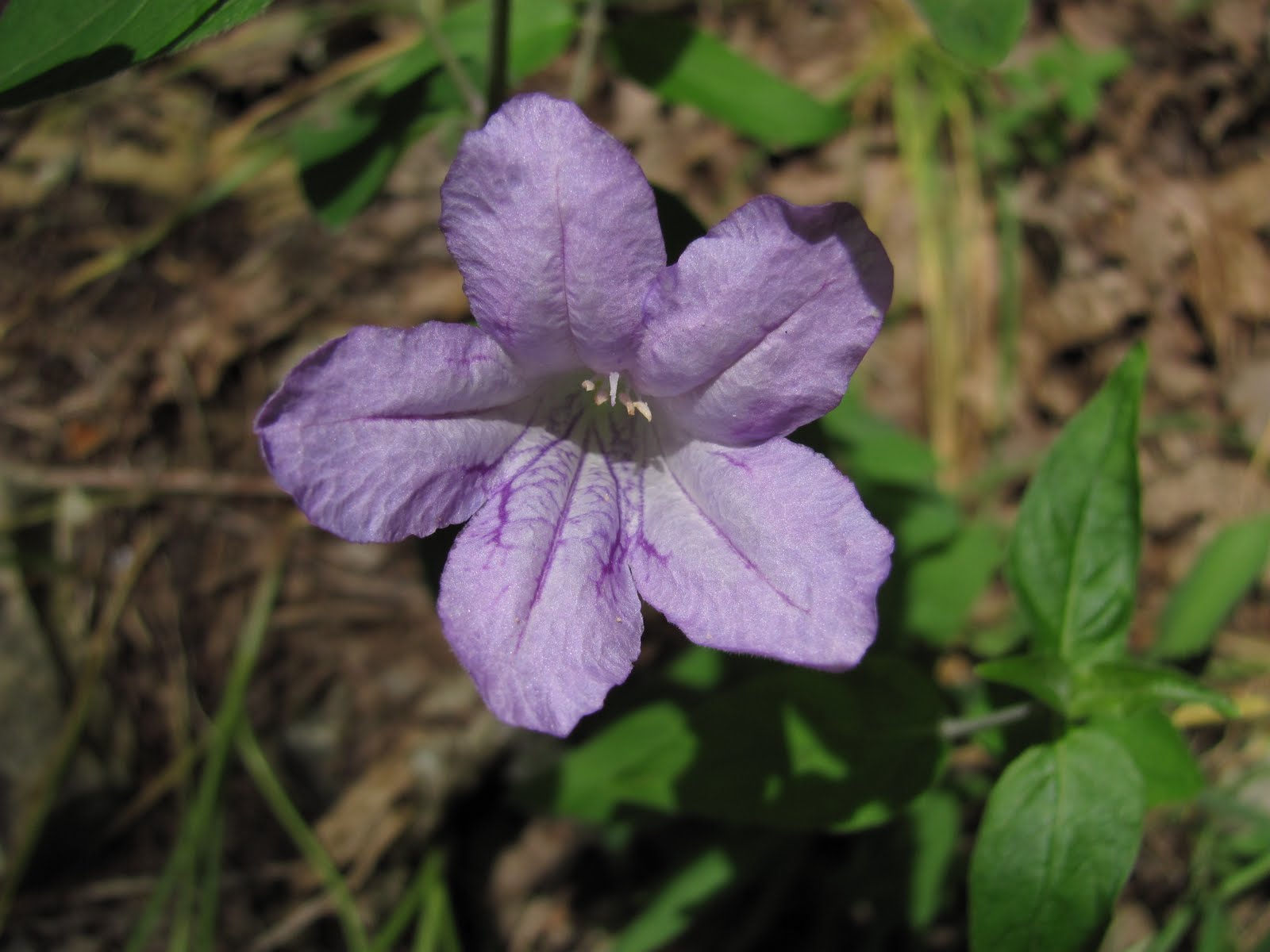
Ruellia

Yarrow

Prairie rose

Yellow clover

daisy fleabane

The wonderful golden seed puff of goatsbeard

Not your average garden! But this is where they all live, and do it so beautifully!

Many of these grow in my garden, and I find that they do very well. (Note: Most of them have come on their own, with no help from me, except to recognize them when I saw them.) Almost too well, in fact. With good soil and plentiful water, the majority of them tend to be a bit invasive, or at the least, extremely aggressive. They have to be tended to with a ruthless hand, pulling them out with no sentiment or there would be no paths or beds, just a sea of wildflowers to wade through! Which, come to think of it, might not be such a bad thing!

"A wildflower is just a weed with a pretty face. If ragweed was beautiful, we wouldn't care if it made us sneeze!"---Anon.
To learn more about the Roaring River Conservation Opportunity Area, please visit their website:
http://mdc4.mdc.mo.gov/Documents/17987.pdf And if you get an opportunity, visit in person!

Saturday, March 20, 2010

Keeping the natives under control

As much as I do love the native plants, I have learned over the last 25 years that all things must be kept in moderation. After spending all yesterday ripping out a huge patch of Virginia waterleaf (hydrophyllum virginianum) that had gotten totally out of hand--and by no means did I get it all, there are still great drifts of it--(that stuff is endangered in some areas? Really?) it was once again brought home to me that messing with Mother Nature is not to be undertaken lightly, or you may regret what you have wrought. I planted a couple of those plants in my woods about 20 years ago, and for years, it grew to be a nice, flourishing, pretty little patch, lovely spring blooms that the bees love. And then, little by little, it began creeping, then leaping. First thing I know, it's invading the ferns, shoving in among the hellebores, pushing aside the Jacob's ladder, popping up in the middle of the hostas, choking the lilies to death and swarming across the paths and making itself at home in the perennial beds. Besides being rhizatomas, making huge, solid, impenetrable mats that take a mattock to pry loose, it spreads by seeds so no telling where it will turn up. At least 50 feet away from the original patch. I moved a lot of it down to the bottom of the woods where it can spread to it's heart's content without making it's neighbors miserable and I will be working diligently to get it out of all the other areas where it has settled down. I do love it, but enough already!

That said, and while we are on the subject of  planting native, which I fully endorse, a little common sense and observation of nature is in order before you begin. If you see huge drifts of say, Queen Anne's lace along the road, or sweeps of black-eyed susans in a field, that will give you a clue of how they behave when they get established. I have them both in my garden, and usually I try to dead-head them before they go to ripen, leaving only a few to reseed. Some plants can reseed all they want without causing a real problem, like the columbines, of which I don't think there are ever enough, and woodland phlox, which is easily moved if it spreads too far. Spring ephimerals, like trout lilies, trilliums, Virginia bluebells, bloodroot, and hepatica, which belong in a shady woods setting anyway, where they won't be disturbed, can spread all they want without causing a problem. Mayapples, violets, certain ferns, and solomon's seal, beautiful as they are, should not be turned loose in a garden border unless that is all you want to have in a few years time. Native plants are like wild animals; beautiful, sometimes elusive, and we all want them for pets, but they can be terrible and not at all able to be domesticated!  There are many wonderful cultivars of  wild plants which ahave been bred to make good garden plants, and if you want a reasonably tidy garden, those are probably the ones you should seek out. If going totally native is what you're interested in, then neatness in a garden is probably not your style.  Growing native can be a lot of work!

You should also be careful what "native" plants you go for. Learn what is considered a noxious weed in your state, such as Canada and Scotch thistle, some varieties (or all) of lythrum, kudzu, multiflora rose, among others, and also know that they are NOT native plants, but like Japanese honeysuckle, have been imported and are vicious invasive marauders, and in some cases, it is illegal to grow them. Also, some true natives are considered rare and endangered (like the Virginia waterleaf) in some states and may grow prolifically in others.

Knowing your zone is also important. There is probably no way to grow ferns from the Pacific Northwest, in Missouri (ask me, I have tried), or desert sage in North Carolina. What you should look for are plants that are native to the area in which you live. Not only will they look natural in your setting, you will not be introducing a species that might go hog wild and try global domination in your good soil conditions that they wouldn't get where they normally grow. Or, just die because you don't have cool nights, or hot enough days, warm enough winters, too warm winters, or the elevation is wrong.
You will find that there is a lot of overlap between zones, and many wildflowers and lovely natives that grow in Minnesota or Canada will grow as far south as zone 7, possibly 8.  

But regardless of their zone, you probably cannot grow saltwater beach plants in the Ozarks, or freshwater swamp plants on the oceanfront. You need to give them the kind of soil and growing conditions they have in the wild, in order to be successful. But always take with a grain of salt what the books tell you; e.g. those Virginia bluebells? Books say they need moist, cool woodland soil. In my Ozarks plateau woods, they are happily making well-established colonies in rocky, dry soil in our hot summers, reseeding themselves in the gravel paths, between stepping stones, and in odd corners everywhere. They do go dormant in the summer, their beautiful blue bells only a brief spring show, so they never get to be a nuisance. Others, needing a lot of shade in the wild, may grow very well (too well) in part sun if they have extra moisture.

You just can't have them all, nor would you want them in a lot of instances. So do your research, choose wisely, grow native, and enjoy!

Wednesday, March 17, 2010

Love the natives!


From the time I was a child, one of my favorite pleasures has been to walk in the woods and seek out and enjoy wildflowers. I had the good fortune to grow up in a rural area in mid-Michigan on a farm, with a huge cedar swamp and a couple of patches of deciduous woods to explore. I reveled in such woodland treasures as trailing arbutus, blood root, dog-tooth violets, huge white trilliums, violets of all kinds, witch hazel, wild phlox, and secret dark places under the pines where Indian pipes thrust up ghostly white flowers. In the summer there were black-eyed susans, daisies, blackberries, columbine and meadows full of flowers taller than I was (which in retrospect, wasn't that tall at all!). Fall brought goldenrod and wild grapes and chokeberries for juice and jellies. Down in the deep swamp there were soft mosses, ferns, fascinating fungi and water plants that I never learned to identiy but loved anyway. On the sandy barrens were sun mosses and lichens, British soldiers that I loved, laying on my stomach to study them in the hot sun. I knew where all the bee trees were, where the blackberries and wild grapes were the thickest. I knew where the owl roosted in the daytime, where the deer hid in the swamp and played with turtles, watched for snakes, and hunted bear tracks. I never saw one but there were, actually, black bears in those cedar swamps, and still are, for all I know.   My wonderful days in those woods influenced my gardening tastes for all of my life.
As I grew up and made gardens of my own, I always made a special spot for my native loves. To my delight, my Chaotic acre came with a small patch of woods, already blessed with a small patch of wild things, to which I have spent the last 25 years adding native plants and wildflowers. Now, I have a veritable carpet of them, and as often happens, new things keep showing up voluntarily each year, probably as a result of birds "helping" me. I also use native plants in my perennial beds and borders. I find that they are hardier, more disease resistant, bloom longer, and their colors are not as garish nor their flowers as outlandish as some of the new cultivars. So....I have been asked to post a partial list of the nearly 300 different varieties of native things I have, some of them truly native and some of them I have naturalized. I left out a lot, there isn't enough space on these pages for everything and you all would be bored to tears with such a list.  

Erigenia (Harbinger of Spring)
Claytonia Virginica (Spring Beauty)
Isopyrum biternatum (false rue anemone)
Hepatica Nobilis (hepatica)
Erythronium Albidum (dog-tooth violet)
Dentaria Laciniata (toothwort)
Dicentra ucullaria (Dutchman's breeches)
Podyphyllum peltatum (Mayapple)
Nothoscordum bivalve (False Garlic)
Antennaria plantaginifolia (pussytoes)
Sanguinaria canadensis (bloodroot)
Prunus serotina (black cherry)
Trillium Flexipes (white trillium)
Ribes missouriense (wild gooseberry)
Anemone virginiana (Thimbleweed)
Camassia Scilloides (wild hyacinth)
Houstonia (bluets)
Fragaria virginiana (wild strawberry)
Smilacina racemosa (false Solomon's seal)
Polygonatum commutatum (Solomon's seal)
Verbascum blattaria (moth mullein, yellow)
Penstemon digitalis (beard tongue, wild penstemon)
Daucus carota (Queen Anne's lace)
Baptisia
Achillea millefolium (Yarrow)
Chrysanthemum leucanthemum (ox-eye daisy)
Silene Stellata (starry campion)
Veronicastrum (Culver's root)
Gaura
Eupatorium (Joe-Pye weed)
Spiranthes (Ladies tresses, wild orchid)
Ranunculus (buttercup)
Corydalis flavula (pale corydalis)
Brassica nigra (black mustard)
Stylophorum diphyllum (celandine poppy)
Hesperis Matronalis (dames's rocket)
Coreopsis laceolata (tickseed coreopsis)
Aesculus (buckeye)
Oenethera misouriensis ( Missouri evening primrose)
Impatiens capensis (wild impatiens, touch-me-not)
Rudbeckia Hirta (black-eyed Susan)
Verbascum thapsus (Mullein)
Ratibidia pinnata (grey-headed coneflower)
Ooenothera biennis (evening primrose)
Hypericum (St John's wort)
Cassia (wild senna)
Belamcanda (blackberry lily)
Bidens (Beggar-ticks)
Solidago (goldenrood)
Arisaema dracontium (green dragon)
Thalictrum (meadow-ryue)
Arisaema atroarubens (Jack in the pulpit)
Asarum canadensis (wild ginger)
Trillium sessile
Cercis canadensis (redbud)
Dodecatheon (shooting star)
Geranium maculatum (wild geranium)
Monarda (2 wild varieties, one blooms early spring, native to Arkansas)
Aquilegia canadensis (columbine)
Miribilis (wild 4-o'clock)
Echinacia (Coneflower)
Asclepias purpurascens (purple milkweed)
Campsis radicans (trumpet vine)
Oenethera speciosa (pink evening primrose)
Physostegia virginica
Ruellia (wild petunia)
Shrankia (sensitive briar)
Saponaria (soapwort)
Phlox divaricata (wild phlox, 3 or 4 varieties)
Liatris (2 or 2 varieties)
Asters, several varieties
Violas (7 varieties, yellows, whites, blues)
Mertensia virginica (virginia bluebells)
Sisyrinchium (Blue-eyed grass)
Polemonium (Jacob's ladder)
Viola pedata (bird's foot violet)
Tradescantia (spiderwort, several varieties)
Phacelia (Miami mist)
Amsonia
Amorpha canescens (lead plant)
Chicorium (chicory)
Camanula American (tall bellflower)
Gentiana andrewsii (closed gentian)
Eupatorium (mist flower)
Iris fulva Copper iris)
Iris pseudacorus (yellow flag)
Water pickerel
a dozen or so varieties of native ferns
Tiarella cordifolia
Many mosses and lichens
Trees and shrubs
Cornus Florida (white dogwood)
           also red-twig and grey-twig dogwood)
Crataegus (Hawthorn, the Missouri state tree)
Viburnum (blackhaw)
Deciduous holly
Red oak
Blackjack oak
White oak
Hickory
Cercis canadensis (redbud)
Amalanchier (serviceberry)
Sambucus canadensis (elderberry)
White pine
Catalpa
Black cherry
Bird Cherry
Hazelnut
Staghorn sumac
Cotinus (American smoke tree)
Hackberry
Robinia (black locust)
Robinia (Bristly locust)
Sassafras
American bittersweet
Hamamelis (witchhazel)
Juniperus Virginiana (red cedar)
Juglans nigra (black walnut)


Take the garden smackdown challenge!  http://www.gardensmackdown.com/ Post a list of the native plants you grow!

 A book I recommend: " Landscaping with Wildflowers" by Jim Wilson.

Tuesday, March 16, 2010

Where have all the old ones gone?

In my Garden of Books, where I spend a lot of time when bad weather prevents me from being outdoors, I have several garden books written 75-100 years ago. I love reading about plants of days gone by, heirloom varieties that seem to have simply vanished, and I wonder if many of them are still around? There are some vendors who specialize in "antique" plants, but many of the sames I see are not on their lists. The white daffodils for example, were the rage in the l930's. Names such as Alice Knights, Beersheba, Driven Snow, Eskimo, Everest, La Vestale,  Trappist, White Emperor, White Knight, Lovenest, Silver Glory, Eve, and among the Triandus hybrids, out of Agnes Harvey, Moonshine, and Thalia, only the latter seems to be still in commerce.  There were doubles: Albus plenus odoratus, Mary Copeland, the Pearl, and Snowsprite. There are many old varieties in my garden, which was old when I moved here, and I don't know their names, but they are beautiful nonetheless.

There were Houstonias (bluets, or Quaker ladies,) , those tiny blue stars that make you bend down to see them, in several varieties, most of which, I expect, have just been allowed to go back to being wildflowers, and we will have to hunt them out again if we want them in our gardens. I think I will, and plant them as a ground cover for some of the spring bulbs, as Henry Dupont did in his famous gardens.

And oh, the old roses! These days we have the new continous blooming, no-labor varieties such as the Knockouts, because of course nobody wants a bush that only blooms once a year (huh, what about azaleas, and dogwoods, and forsythia......). What of the old ones, the musk roses, the rugosas, the old moss roses? I love the names: Madame Plantier, Coquettes des Blanches, Glorie Dijon, Marechal Neil, Baltimore Belle, Harrison's Yelow, Jaqueminot, Camile de Rohan. Thankfully rose societies have saved as many of them as they can. I much prefer them to the fat, spoiled, scentless hybrid teas and shrub roses that have wonderful flowers, but when you bury your nose in them, there is nothing.....no soul. I would rather have a wild multiplier rose that needs to be handled with a heavy hand like a rowdy child, pruned and hacked back to within an inch of it's life in order to keep it from taking over my world, but that perfumes the air for yards around with it's delicate white blooms.

With the current explosion of new varieties in heucheras, echinaceas, irises, hostas, hemerocallis and others, I sometimes wonder if  75 years hence gardeners will be asking, "Where do you suppose those old varieties went, that were here at the turn of the century?"