Tuesday, May 25, 2010

Missouri Botanical Gardens, Japanese Garden


It was a smooth transition from the woodland garden to the Japanese Garden, my next favorite place at MoBot.  (They are all my favorite places, who do I think I'm kidding?!!)

Not going to try to caption all these, just enjoy the wonderful tranquility and let it speak for itself.

The first lantern, guiding us into the garden, set in a gravel stream.. 

This basin was at the entrance to the Garden.


Moss lawn


Hungry Koi looking for a handout. Some of these were 3-4' long!


The bridge to the teahouse island. It was closed except to special groups.


The last lantern on the way out of the garden. Hope you enjoyed the tour!

Tomorrow, the best of the rest!!

Sunday, May 23, 2010

Missouri Botanical Gardens, Woodland Garden


There is so much to see and enjoy at Missouri Botanical Gardens! But my favorite part of it all has to be the woodland garden. I would have just been glad to wander around in there for hours, but The Person I Was With wanted to see the rest .

You wildflower plant geeks are gonna love this place.

Mayapple, podophyllum"Spotty Dotty"!

I love the red flowers! Do I want this one? Hella yes!

Small pond, statuary "Three Graces". Water is a bit murky but it had been raining for days.

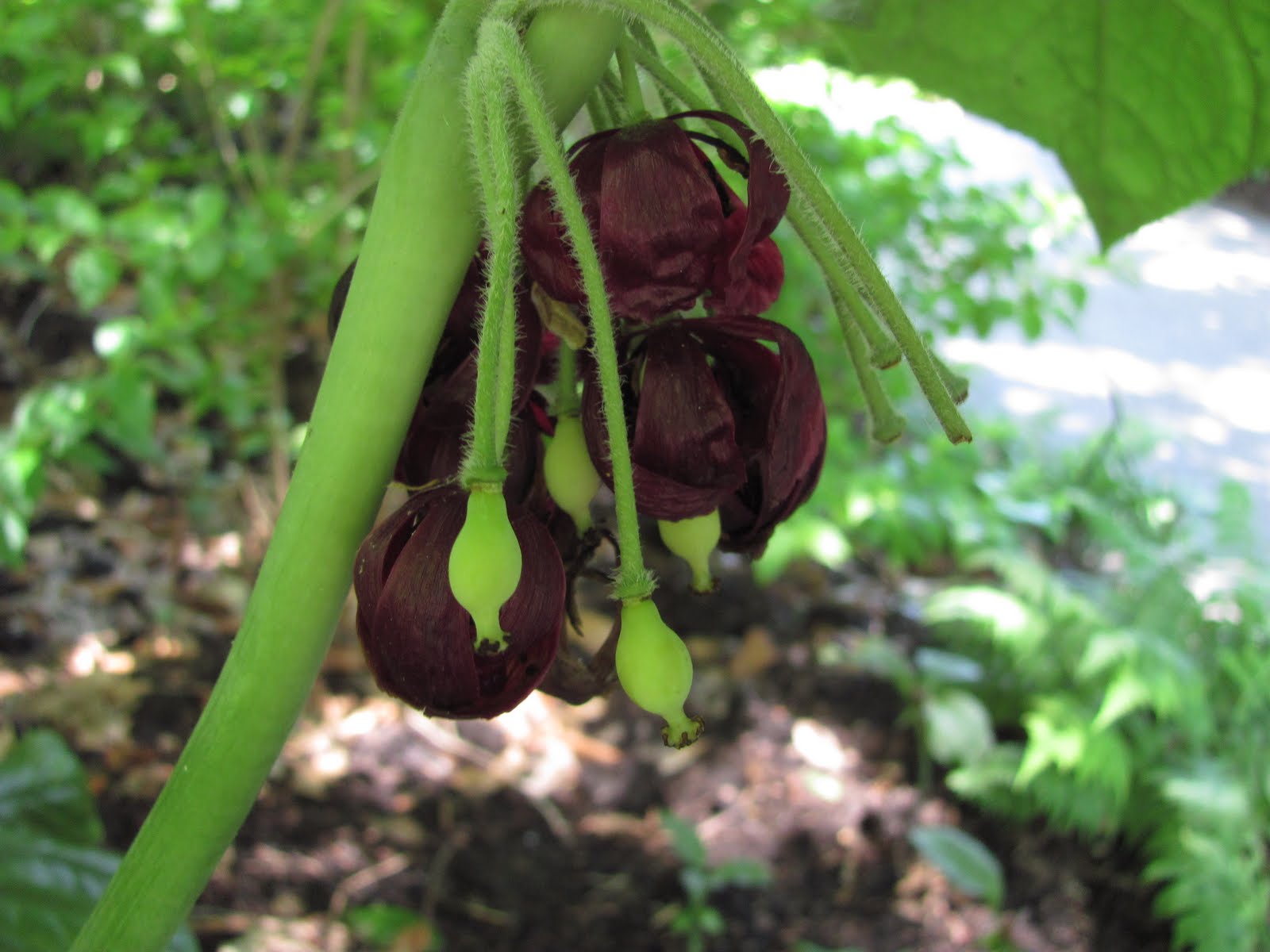
Another mayapple! I love these things! Podophyllum plianthum Dysosma

Wow! What is this, I asked!

Jack in the pulpit, Arisaema ringens. Gorgeous!

This robin was just having the BEST time!

 Allspice, sinocalycanthus chinensis I think I have to have this shrub!

Another arum, arisaema serratum

Would you have believed this was an epimedium? epimedium latisepalum
Looks like they have trouble with four-legged critters too! I just did this very thing with a wire basket to protect a hosta that was being attacked by deer, the morning we left for St Louis. Worked, too!

I love this stream winding through the woodland garden

So does this lovely couple!

European beech, fagus sylvatica. A wonderfully picturesque tree.

And onwards to the Japanese Garden.

So many pictures (I took nearly a thousand), so many plants, and so little time! Tomorrow, the Japanese Garden.

Saturday, May 22, 2010

I love Missouri Botanical Gardens!

 It was a most gorgeous day when we were at Missouri Botanical Gardens last weekend, and what a wonderful way to spend our anniversary! We took sooo many pictures, and I have decided that there is no way to edit them down into one post, so this is the first of several.

I have tried to think of how to frame these pictures with words, but I just decided to let MoBot speak for itself, with captions. Enjoy the pictures.

Chihouly glass sculpture arch in rose garden

One of many artworks in the Garden

The Queen of the Garden on her throne....yeah that would be me!

I've always loved this sculpture with bells

One of many gorgeous planters


Victorian garden

glass scultures floating in the pond, Climatron in the background


Detail of Victorian garden

If you can stand another iris pic, Edith Woford

The Maze

Tiger's eyes sumac

Very old hackberry tree. I love the huge, old trees of this garden.

The ancient trunk of this tree is truly awesome.

Another ancient tree, a sweetgum (and Himself, my gardening and life partner)

Japanese tree lilac. Never knew they could get so big!


Daylily garden, not blooming much yet.

except for this one: "Apricot"

Tomorrow, the English Woodland garden, where I could have spent days instead of hours. Fascinating plants there!

Sunday, May 16, 2010

Mother Nature's Magic Tricks Need a Lot of Patience!

When you plant something and it gets all yellow and disappears that same summer; and it doesn't come up again the next year, you know it's dead, right? Well apparently not always! I planted a golden seal (hydrastis canadensis) in a woods bed a couple of years ago, and in spite of what I thought of as proper care, it left me and I just assumed it didn't like my conditions. Though what conditions it would like, I could only guess, as I gave it the humus-rich woodland soil it is supposed to want. I was hoping to get a start on a "very large colony", as my Misouri Wildflowers book hints of, but I thought, alas, not to be.

Not so fast! For three years later, as I'm weeding the area, I find this, the original plant tag still right next to it:


And with a bud, no less! It must have been lying dormant, growing a root system all this time. I have read that it demands moist conditions but it doesn't really get that here, so it may be more adaptable than the books say. (The same books also say that Virginia bluebells like moist conditions but I find they grow in most any woodsy soil, and in my gravel paths just fine.) I'm assuming that it may act like many other native woodland plants, which go dormant when the summer gets hot and dry, resting and marshalling their forces, developing root systems underground with no energy output used in keeping leaves alive; until the next growing season. Ginseng (Panax quinquefolium) does the same thing, disappearing in July or August to reappear in spring twice the size it was the previous year.

I am going to be careful to watch for the ripening seeds, and scatter them in a couple of other places in the woods, including one spot that stays a mite damper than others, and see if they come up. The flower blooms a sort of non-distinguished greenish white, fuzzy little ball of stamens and pistils with no petals, that soon turns into a compact cluster of scarlet berries. If harvested, they should be planted fresh, or they will develop a double dormancy that takes 2 winters to break (just like ginseng again), coming up in the second spring.

Goldenseal is one of the valued medicinal herbs that is harvested for its horizontal rhizomes. A long-lived herbaceous perennial of the deep woods, the root resembles a small, crooked finger. The name is derived from the golden yellow color of the rhizome and clearly identifies it from all look-alikes, of which it has many. Goldenseal root contains an antimicrobial constituent which is used in treatment of upper respiratory infections. In small doses it is also said to be a stimulent to digestion and tones the digestive tract.

Goldenseal and ginseng are both often illegally harvested in the wild, which decimates native stands.  Raiders risk heavy fines from conservation agencies, and possibly a pants-load of buckshot., as growers of woods patches guard their valuable crops zealously. On the other hand, planting as a cash crop is encouraged and seeds of both are readily available. It does take several years before roots are big enough to harvest, often 7-9 years. Kind of a long time to wait!

 
Ginseng, in their second year. The tiny plants in the background are first year plants, the seeds having gone through the double dormancy period and come up the second spring, even though they were all planted at the same time. It will be several years yet before these babies are big enough to be harvested.

As for me, I don't plan on getting rich from my tiny patch. I just grow them for fun--and to see if I can!

For more information on growing both these plants, here is a useful link:

"Nature does nothing in vain."
              --Sir Thomas Browne


Wednesday, May 12, 2010

Nature Does It With Flair! Columbines!

Hardy orchid Bletilla

Everytime I go out the door I am awestruck by the world outside. Mother Nature never does anything by half, and there is more drama and intrigue out there than ever in anyone's imagination on daytime TV. I could never understand why anybody would want to stay indoors and watch soap operas when there is so much going on just outside the walls of their own houses!
Oh, the columbines this year!


All of these columbines have hybridized into these shapes and colors, and have reseeded in the garden with no help or interference from any human.

But what;s really neat about these plants:
Notice the flower on the right, normal position, new bloom. The one above it is starting to turn up, in horizontal position. The one at left is setting seed, the petals ready to fall, in upright position. See the seed capsule standing upright above the shriveled petals? When it ripens, it splits open and the seeds fly out everywhere! What a great seed delivery system! 

I love Mother Nature!

"This life, sae far's I understand,
Is an enchanted fairie-land,
Where pleasure is a magic wand
That, wielded right,
Makes hours like minutes hand in hand
Dance by fir' light."
           
--Robert Burns